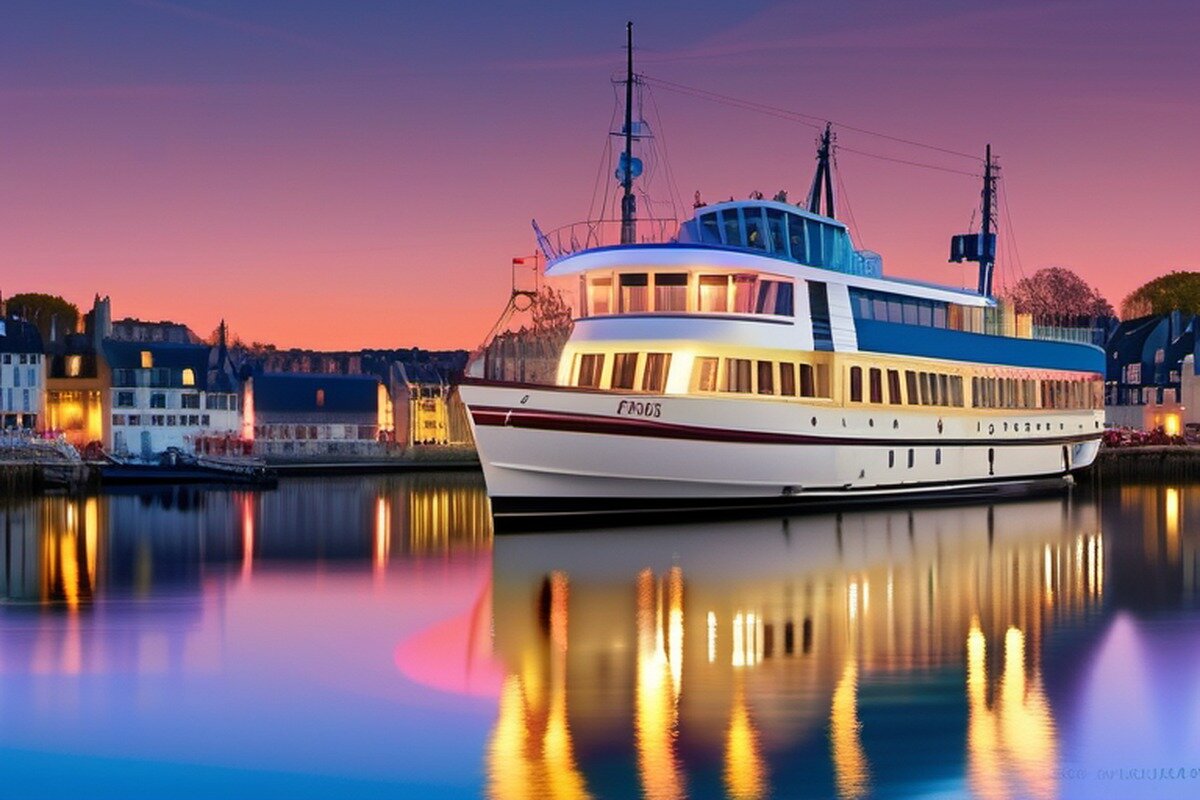
CroisiEurope’s Botticelli fire in Honfleur shows why river-ship emergency discipline matters
A fire broke out aboard CroisiEurope’s Botticelli while the river ship was moored in Honfleur, France, early on June 29, 2026. All passengers and crew were evacuated safely, with no injuries reported, making the incident a serious safety story rather than a casualty story.
An early-morning fire turned into a test of procedures
A fire aboard a cruise vessel is always serious, even when the ship is tied up alongside a quay. On June 29, 2026, CroisiEurope’s Botticelli experienced a fire at about 4:00 a.m. while moored in Honfleur, France. The timing made the situation especially sensitive because passengers would normally have been asleep and dependent on crew instructions, alarms and local emergency support.
Everyone was evacuated safely
CroisiEurope said emergency procedures were activated immediately and that all passengers and crew were evacuated. Local emergency information cited by Cruise Industry News put the total evacuation at 163 people, including 132 passengers and 31 crew members. No injuries were reported, which is the most important fact in the story.
The response required a large local effort
The fire was brought under control with the help of nearly 90 firefighters. That scale matters. River ships operate close to towns, bridges, quays and other vessels, so an onboard incident can quickly become a coordinated port, municipal and emergency-services operation. Honfleur’s response shows how shore-side capacity can be just as important as shipboard procedures.
Crew behavior becomes visible in moments like this
CroisiEurope publicly thanked its crew for assisting passengers calmly and efficiently. In a fire, crew training is not an abstract compliance item. It is the difference between a confused evacuation and an orderly one, especially at night when passengers may be disoriented, half-dressed and separated from normal travel documents or belongings.
Passengers now need practical support
The cruise line said it expected to begin arrangements for passengers to return home the following day. After a safe evacuation, the next phase is logistics: accommodation, onward travel, medication access, lost or inaccessible luggage, insurance paperwork and communication with families. Those steps shape how passengers remember the incident once the immediate danger has passed.
Botticelli is part of the European river market
The Botticelli was built in 2004 and renovated in 2016, and operates Seine River cruises. River vessels are smaller than ocean cruise ships, but that does not make safety management simple. They carry hotel operations, machinery, passenger cabins and galley spaces in a compact footprint, often while operating through historic ports and dense waterways.
The wider lesson for cruise operators
The absence of injuries should not make the event disappear from industry attention. It should prompt quiet review: alarm timing, passenger mustering, crew communication, coordination with local fire departments and post-incident care. A good outcome still deserves analysis because the next incident may not be so forgiving.
The news signal
This was not a routine itinerary change or a minor delay. It was a real emergency that appears to have been contained through procedure, crew action and local response. For river cruising, the Botticelli incident is a reminder that safety is not only about ships at sea. It is also about what happens before dawn, at the pier, when the system has to work immediately.