When propulsion issues cancel ports mid-cruise, protect your options before emotion takes over
Useful Info 3 min read Федя, Easy Sea Travel 27 Jun 2026

When propulsion issues cancel ports mid-cruise, protect your options before emotion takes over

Norwegian Sun’s Northern Europe sailing lost multiple planned calls after reduced-speed propulsion problems, with compensation offered to passengers. For travelers, the useful lesson is to document every change, understand onboard credit and refund limits, and rebuild port plans quickly instead of waiting for the perfect fix.

A technical issue can turn an itinerary into a moving target

Most cruise passengers plan around the printed route, but ships are machines and schedules can change quickly. Cruise Fever reported on June 26, 2026 that Norwegian Sun, sailing a Northern Europe itinerary, had to cancel multiple planned ports after propulsion issues limited the ship’s speed.

Safety and satisfaction are separate questions

The cruise line told guests the issue did not affect onboard safety, but the reduced speed still changed the vacation. That distinction matters. A ship can be safe to sail while still unable to deliver the itinerary guests bought. Passengers should listen for both messages: whether they are safe and what practical compensation or alternatives are being offered.

Write down the exact changes

In this case, planned calls in Sweden, Lithuania and Poland were canceled or replaced, including a substitution with Rønne, Denmark. When changes happen, save letters, app notices, daily programs, excursion cancellation emails and screenshots. Documentation helps with travel insurance, credit card claims and later conversations with the cruise line.

Check excursions immediately

Ship-booked excursions are usually handled automatically when a port is canceled, but independent tours may require fast action. Contact operators, explain the ship change and ask about refunds or credit. Do this while still onboard if possible, because deadlines may be measured in hours rather than days.

Understand what compensation actually covers

Cruise lines may offer onboard credit, refunds for missed port charges, excursion refunds or future cruise credit depending on the situation and contract terms. Read the offer carefully. Onboard credit is useful only if you can spend it on things you value before the cruise ends, while future credit may come with deadlines and exclusions.

Rebuild the remaining trip around what is still possible

It is natural to be frustrated, especially when a dream port disappears. But once the change is final, the best move is to make the replacement day work. Research the new port, check shuttle information, look for simple walking routes and choose one or two realistic goals rather than trying to recreate the original plan.

Travel insurance may help, but wording matters

Some policies include itinerary-change, missed-port or trip-interruption benefits, while others exclude schedule changes made by the cruise line. Keep documents and file promptly, but do not assume every disappointment becomes a payable claim. The policy language decides.

The practical response

Stay calm, collect documentation, confirm excursion refunds, read the compensation offer, ask guest services specific questions and adapt the port plan quickly. A propulsion problem can take control of the schedule, but a methodical response helps passengers keep control of their money, records and remaining vacation time.

ФE
Федя, Easy Sea Travel
Contributing writer
Trafalgar’s river cruise campaign shows why storytelling is becoming part of cruise life
Cruise Life 3 min read Федя, Easy Sea Travel 27 Jun 2026

Trafalgar’s river cruise campaign shows why storytelling is becoming part of cruise life

Trafalgar has launched its first major river cruise campaign after strong first-year demand for its European sailings. The message is less about hardware and more about local perspective, guided discovery and the feeling that a river cruise should unfold like a story rather than a simple itinerary.

River cruising sells a different kind of onboard rhythm

Ocean cruising often talks about ships, entertainment and private destinations. River cruising tends to sell proximity: towns close outside the window, guides waiting ashore and days that feel stitched into the landscape. Cruise Industry News reported on June 26, 2026 that Trafalgar is launching its first major river cruise brand campaign, “Sail A Great Story.”

The campaign is aimed at emotion, not only product awareness

The campaign runs from June through September 2026 and is designed to shift attention from simply introducing the product to showing immersive experiences and authentic local perspectives. That is a telling move. Once travelers know a brand has river ships, the next question is what the journey feels like.

Trafalgar is using its tour identity at sea

Trafalgar is already known for guided land travel, so river cruising gives it a natural bridge. The brand can lean on storytelling, local hosts, planned experiences and a sense of curated discovery rather than trying to compete only on ship amenities.

First-year demand gives the campaign context

The push follows what Trafalgar described as strong first-year demand on inaugural European river sailings aboard Trafalgar Reverie and Trafalgar Verity. That matters because it suggests the company is not only testing a niche add-on, but trying to build a recognizable river cruise identity.

The passenger experience is more intimate

On a river ship, the day can feel less divided between “onboard” and “ashore.” A village, vineyard, cathedral or market may be visible from the deck before guests ever disembark. That closeness makes storytelling especially powerful because the setting is constantly present.

Travel advisors are part of the strategy

Trafalgar’s comments also point to travel advisors as a key audience. River cruising can be harder to compare than a standard seven-night ocean cruise because inclusions, excursions, pace and local access vary widely. Advisors can help explain those differences to travelers entering the category for the first time.

For guests, the lesson is to look beyond the brochure route

Two river cruises can visit similar regions and still feel very different. The guide style, evening pacing, included experiences, dining tone and how much free time is protected all shape the memory. A good river cruise is not just a sequence of ports; it is the way those places are interpreted.

The cruise-life takeaway

Trafalgar’s campaign reflects a wider trend: cruise lines are selling meaning as much as movement. For travelers who want the ship to become a lens on Europe rather than a floating hotel, storytelling is not decoration. It is part of the product.

ФE
Федя, Easy Sea Travel
Contributing writer
MSC and Meyer Werft’s “New Frontier” talks show the next cruise building cycle is already forming
News 3 min read Федя, Easy Sea Travel 27 Jun 2026

MSC and Meyer Werft’s “New Frontier” talks show the next cruise building cycle is already forming

MSC Cruises and Meyer Werft say negotiations are advanced for four next-generation ships plus two options, with deliveries expected annually from 2030 if the contracts close. The update matters because it points to shipyard capacity, fleet scale and the next phase of large-ship design beyond the current orderbook.

The next decade of cruise construction is taking shape now

Cruise ship news often focuses on vessels entering service this year, but the most important industry signals sometimes sit farther out. Cruise Industry News reported on June 26, 2026 that MSC Cruises and Meyer Werft expect to conclude negotiations in the coming weeks for four next-generation cruise ships and two additional options.

The project already has a name

The proposed class is called “New Frontier,” following a letter of intent announced in December 2025. That naming matters because it suggests this is not simply another routine repeat order. MSC and the shipyard are framing the program as a new design step, with contract work complex enough to require months of negotiation.

Shipyard capacity is part of the story

For Meyer Werft, a confirmed four-plus-two agreement would secure major work well into the next decade. Large cruise vessels are not built quickly or casually. They require design teams, supplier networks, cabin production, hotel systems, propulsion planning and years of drydock scheduling. A deal of this size is as much an industrial commitment as a cruise brand announcement.

The proposed ships are very large

The vessels are expected to be about 180,000 tons with a maximum passenger capacity of roughly 5,400, with annual deliveries planned from 2030 if the final contracts are signed. That places the project firmly in the large resort-ship category, where onboard neighborhoods, entertainment density, energy systems and crowd flow become central design questions.

MSC is betting beyond today’s demand cycle

Ordering ships for 2030 and beyond means taking a view on long-term demand, not only next summer’s bookings. MSC has grown into one of the most aggressive global cruise brands, and a new class would help it keep pressure on competitors in Europe, North America and emerging markets.

The timing is not accidental

Cruise lines are balancing strong booking demand with pressure from fuel costs, emissions rules, port limits and guest expectations. A future ship class has to answer all of those at once. It must be large enough to earn money, efficient enough to operate responsibly and flexible enough to work across several markets.

Passengers may feel the result through design

Most travelers do not follow shipyard negotiations, but they eventually notice the consequences. New classes influence cabin mix, family facilities, dining variety, suite areas, entertainment venues, outdoor space and how crowded a ship feels on sea days. The contract table is where many of those future vacation choices begin.

The wider signal

The MSC and Meyer Werft update shows that cruise growth has not paused at the end of the current newbuild wave. The industry is already planning the hardware of the 2030s. If the agreement closes, the “New Frontier” class will become one of the clearest signs that large-ship cruising is still being designed for expansion, not retreat.

ФE
Федя, Easy Sea Travel
Contributing writer
Booking a new ship’s maiden season: what Legend of the Seas teaches planners
Useful Info 3 min read Федя, Easy Sea Travel 26 Jun 2026

Booking a new ship’s maiden season: what Legend of the Seas teaches planners

Legend of the Seas begins service in July 2026 with Western Mediterranean cruises, then crosses to Fort Lauderdale for Caribbean sailings in November. For travelers, the maiden-season schedule is a useful reminder to compare first-cruise excitement with route, timing, airfare, sea days and early-operation uncertainty.

A maiden season is not just one sailing

New ships create excitement, but the smartest way to book them is to look at the full first-season arc. Cruise Industry News reported on June 25, 2026 that Royal Caribbean’s Legend of the Seas is scheduled to enter service in early July with an initial program spanning the Western Mediterranean, a transatlantic crossing and Caribbean cruises from Fort Lauderdale.

Start with the first itinerary, not the hype

The ship’s first cruise is scheduled for July 4, 2026: a seven-night Western Mediterranean sailing from Civitavecchia, the port for Rome, visiting La Spezia, Palma de Mallorca, Barcelona and Marseille. That is a strong route, but it also means airfare, pre-cruise hotels and summer Europe logistics need to be part of the budget.

Compare similar Mediterranean departures

After three initial seven-night cruises, Legend of the Seas is scheduled for an eight-night Rome-to-Barcelona sailing on July 25, with La Spezia, Naples, Palma de Mallorca and Málaga. Through late October, the ship continues similar Western Mediterranean cruises from Civitavecchia and Barcelona. Travelers should compare dates carefully because one extra night, one different port or one easier flight can change the value.

The transatlantic is a different kind of trip

On October 25, 2026, the ship is scheduled for a 13-night crossing from Barcelona to Fort Lauderdale, visiting Palma de Mallorca, Málaga and Cádiz before multiple sea days. This can be attractive for guests who want more time on the new ship itself, but it requires comfort with a slower pace and a one-way international travel plan.

The Caribbean debut may be simpler for North Americans

Legend of the Seas is scheduled to begin its North American maiden season from Fort Lauderdale on November 14 with an eight-night Southern Caribbean voyage to Aruba, Curaçao and Perfect Day at CocoCay. A six-night Western Caribbean sailing follows on November 22 with Cozumel, Costa Maya and CocoCay. For many U.S. travelers, these departures may be easier than chasing the first Europe sailings.

New ships can have early-operation wrinkles

Maiden seasons can be thrilling, but they may also involve crew learning curves, adjusted entertainment schedules, venue tuning and small service inconsistencies. That does not mean passengers should avoid them. It means early adopters should value novelty and flexibility rather than expecting every detail to feel seasoned from day one.

Watch the total trip cost

A new ship can command strong pricing, and the cruise fare is only one part of the decision. Add flights, hotels, transfers, insurance, specialty dining, onboard packages and excursion costs. A later Caribbean departure may be less glamorous than the first Mediterranean cruise, but it may offer a cleaner total vacation plan.

The practical booking rule

Choose a maiden-season sailing because the route, dates and travel wrapper work, not only because the ship is new. Legend of the Seas gives travelers several very different first-season options: Europe for destination intensity, a transatlantic for ship time, and Fort Lauderdale for easier Caribbean access. The best choice is the one that matches how you actually want to travel.

ФE
Федя, Easy Sea Travel
Contributing writer
Scenic’s chef-led voyages show how food is becoming a main event at sea
Cruise Life 3 min read Федя, Easy Sea Travel 26 Jun 2026

Scenic’s chef-led voyages show how food is becoming a main event at sea

Scenic has announced two September 2026 Tastes of Discovery voyages led by chefs Gabriel Rodriguez and Begoña Rodrigo aboard Scenic Eclipse I and II. The program shows how cruise lines are turning dining into a destination-driven experience rather than treating it as only an onboard amenity.

Food is moving from background amenity to headline experience

Dining has always mattered on cruises, but more lines are now using food as the reason to book a specific sailing. Cruise Industry News reported on June 25, 2026 that Scenic has announced two Tastes of Discovery voyages through Northern Europe and the Mediterranean aboard Scenic Eclipse I and II.

The chefs give the sailings a clear identity

The September 2026 voyages will be led by chefs Gabriel Rodriguez and Begoña Rodrigo. Rodriguez, a finalist on Top Chef Mexico, will join a Bergen-to-Lisbon voyage on Scenic Eclipse beginning September 2. Rodrigo will lead a Barcelona roundtrip on Scenic Eclipse II beginning September 23.

The itinerary and menu are meant to speak to each other

The Northern Europe voyage moves from Norway’s fjords and coastal communities toward Western Europe and Portugal. The Mediterranean voyage includes destinations such as Cannes, Saint-Tropez, Marseille, Mahón, Palma de Mallorca, Ibiza and Valencia. The point is not only to eat well onboard, but to connect meals and demonstrations to the places outside the ship.

That changes the rhythm of cruise life

A chef-led sailing gives passengers a different daily focus. Instead of dining being the final stop after excursions and shows, it becomes part of the itinerary itself. Demonstrations, pairings, destination-inspired menus and presentations can create a thread that runs through the whole voyage.

Small-ship luxury is well suited to this

Experiences like this work best when the ship can make the program feel personal rather than industrial. Luxury and expedition-style vessels often have the right scale for chef interaction, specialty meals and regional storytelling without making guests feel like they are attending a mass event.

The appeal is emotional as much as culinary

Passengers remember a cruise differently when a meal connects to a port, a market, a local ingredient or a story from a chef. That kind of memory can be stronger than a generic luxury dinner because it belongs to a specific place and moment.

There is still a practical question

Travelers should check what is included and what is capacity-controlled. Chef demonstrations, special pairings, tastings and limited dining events may not all be identical or unlimited. A culinary-themed cruise is most satisfying when guests understand the schedule before boarding.

The cruise-life lesson

Scenic’s Tastes of Discovery program reflects a broader shift in cruising: the onboard experience is becoming more specialized. For guests who travel through food, the ship is no longer just a comfortable way to reach ports. It becomes part classroom, part restaurant and part cultural lens.

ФE
Федя, Easy Sea Travel
Contributing writer
Carnival’s Gulf Coast defense shows Texas is becoming a major cruise battleground
News 3 min read Федя, Easy Sea Travel 26 Jun 2026

Carnival’s Gulf Coast defense shows Texas is becoming a major cruise battleground

Carnival Corporation used its latest earnings call to defend its long Gulf Coast lead as Royal Caribbean builds up in Texas. With Carnival carrying about one million guests a year from Galveston and more capacity coming, the region is turning into one of the clearest competitive fronts in U.S. cruising.

The Gulf Coast is no longer a secondary cruise story

Carnival Corporation’s latest comments show how important the Gulf Coast has become to the largest cruise companies. Cruise Industry News reported on June 25, 2026 that Carnival President and CEO Josh Weinstein emphasized the company’s 25-year head start in the region after Royal Caribbean Group signaled its own Texas ambitions earlier this year.

Galveston is the center of the argument

Carnival currently sails approximately one million guests annually from Galveston and operates six ships from the market. That number is expected to grow to seven ships with the arrival of Carnival Tropicale in 2028. In a business where deployment decisions reveal confidence, that is a strong statement about long-term Gulf demand.

The footprint goes beyond one port

Weinstein also pointed to Carnival’s wider Gulf presence in New Orleans, Mobile and Tampa. That matters because the Gulf Coast is not simply a single homeport battle. It is a network of drive-to markets, short cruises, Western Caribbean routes and repeat-passenger habits that can be difficult for a rival to dislodge quickly.

Royal Caribbean is raising the pressure

The comments came after Royal Caribbean International President and CEO Michael Bayley said on an April 30 call that the group expected to own the Texas market for Caribbean cruising. Royal Caribbean has invested in Galveston terminal capacity and has tied its regional pitch to future destination development, even though construction at Perfect Day Mexico has since been halted.

Destinations are part of the competitive map

Carnival is not defending Galveston with ships alone. Weinstein highlighted destination investments including the enhanced pool and cabana offering at Isla Tropicale in Roatan and the company’s Puerto Maya destination in Cozumel. For Western Caribbean cruising, a homeport is only one side of the sale. The destination loop has to feel strong as well.

Drive-to cruising is a strategic advantage

The Gulf Coast serves millions of travelers who can reach a ship without the cost and uncertainty of long-haul flights. That makes the region especially attractive when airfare is expensive or families want simpler vacation logistics. A strong drive-to market can support repeat cruising and shorter itineraries in a way that fly-in markets sometimes cannot.

For passengers, competition can be useful

More pressure between large cruise lines can lead to better terminals, more ship choices, stronger private-destination offerings and sharper promotions. It can also concentrate crowds on familiar Western Caribbean routes, so travelers should compare not only ship and fare but also port days, private destinations and total travel time.

The larger signal

Carnival’s Gulf Coast defense is a sign that cruise growth is being fought market by market. Texas and the wider Gulf are becoming too large to treat as regional side notes. For 2026 and beyond, the contest for Caribbean passengers will be shaped as much by homeport convenience and destination networks as by new ship hardware.

ФE
Федя, Easy Sea Travel
Contributing writer
When a full-ship charter cancels your cruise, treat the offer like a negotiation checklist
Useful Info 3 min read Федя, Easy Sea Travel 25 Jun 2026

When a full-ship charter cancels your cruise, treat the offer like a negotiation checklist

Royal Caribbean canceled a March 7, 2027 Allure of the Seas sailing after the ship was chartered. Guests were offered rebooking, onboard credit, refunds and help with some transportation costs. The useful lesson: compare every option before letting the default rebooking happen.

A charter cancellation is different from a weather change

When a cruise is canceled because an entire ship has been chartered, the problem is not safety or storms. It is inventory. Cruise Fever reported on June 24, 2026 that Royal Caribbean canceled the March 7, 2027 sailing of Allure of the Seas after the Oasis-class ship was booked for a private full-ship charter.

The default option may not be your best option

Impacted guests were offered automatic rebooking on the March 21, 2027 sailing with the same ship and itinerary, with the original stateroom protected at the lower of the original fare or current pricing. That may be convenient, but it only works if the new date fits flights, school calendars, work leave and group plans.

Look at every part of the compensation

Royal Caribbean also offered onboard credit of 100 dollars for interior, oceanview and balcony cabins, 200 dollars for suites and an extra 50 dollars per third and additional guest. Guests could instead choose a full refund with no penalties. The line also said change fees would be waived and some help would be available for non-refundable transportation costs, with limits depending on domestic or international travel.

Make a simple comparison sheet

Before clicking anything, write down three columns: accept the new sailing, move to another vacation, or cancel. Under each one, include cruise fare, airfare changes, hotel changes, time off, school schedules, insurance, onboard credit and any non-refundable costs. The best option is the one with the lowest real disruption, not the one that sounds most generous in the email.

Do not ignore independent travel costs

The cruise line’s offer may not fully cover hotels, private tours, flights booked with points, pet care, work arrangements or other travel pieces you built around the original date. Keep receipts and screenshots, and ask clearly what documentation is required for any transportation reimbursement.

Travel insurance can help, but only if it fits the problem

Standard travel insurance may handle some trip interruption or cancellation costs, but policy wording matters. Cancel-for-any-reason coverage can provide more flexibility, though it usually has purchase deadlines and reimbursement limits. The time to understand those rules is before booking an expensive cruise package.

Watch for silence defaults

In this case, Cruise Fever noted that guests who did nothing would be moved to the later sailing. That may be acceptable, but passengers should never let a default decide a costly vacation without checking the calendar and the total financial impact.

The practical response

Read the notice carefully, compare the options, document outside costs, contact the cruise line or travel advisor promptly and decide before the deadline. A full-ship charter cancellation is frustrating, but a methodical response can keep it from becoming more expensive than it needs to be.

ФE
Федя, Easy Sea Travel
Contributing writer
P&O and Cunard turning ships into summer sports venues shows how shared moments shape cruise life
Cruise Life 3 min read Федя, Easy Sea Travel 25 Jun 2026

P&O and Cunard turning ships into summer sports venues shows how shared moments shape cruise life

P&O Cruises and Cunard will screen the FIFA World Cup, Wimbledon and The Open Championship across their fleets this summer. The move shows how live sport can turn ordinary sea days into communal onboard events, especially when matches are shown in pubs, bars and larger venues.

Live sport changes the rhythm of a ship

A cruise ship already has theaters, lounges, bars and outdoor screens, but live sport gives those spaces a different kind of energy. Cruise Industry News reported on June 24, 2026 that P&O Cruises and Cunard will broadcast every FIFA World Cup 26 match, along with Wimbledon and The Open Championship, across their fleets this summer.

The calendar is doing part of the programming

The World Cup coverage runs from June 11 to July 19, 2026, with all 104 matches available. Wimbledon coverage begins with the tournament on June 29, while The Open Championship will also be shown live. That means the ship’s atmosphere can be shaped by the sporting calendar as much as by the daily planner.

Venues matter

Guests will be able to watch in cabins and staterooms, but the more interesting part is the shared viewing plan. P&O’s Brodie’s bar and Cunard’s Golden Lion pub are natural gathering points, while larger venues such as SkyDome on P&O ships and The Pavilion on Cunard vessels will be used for major moments including England and Scotland matches and the Wimbledon finals.

That creates temporary communities

One of the pleasures of cruising is the way strangers become familiar over a few days. Live sport accelerates that process. A tense match, a late goal, a five-set final or a dramatic golf finish gives passengers an easy reason to talk, cheer, groan and return to the same venue the next day.

It also solves a real passenger problem

Travelers sometimes hesitate to book during major tournaments because they do not want to miss the event at home. Fleetwide sports coverage removes some of that friction. A guest can sail the Mediterranean, Norwegian fjords or a short break itinerary and still follow the matches that matter to them.

The mood will not be neutral for everyone

Big-screen sport can be joyful, but it can also make parts of the ship louder and more event-driven. Passengers who want quiet lounges may need to choose spaces carefully during key matches. For others, the buzz is the point: the cruise becomes part holiday, part tournament watch party.

Brands are using atmosphere as a feature

P&O and Cunard are not changing the hardware of the ships to create this experience. They are using programming, venue selection and broadcast rights to alter the emotional texture of a sailing. That is a low-footprint way to make the same ship feel more timely and socially alive.

The cruise-life lesson

The date of a cruise can matter as much as the route. When major global events happen during a sailing, they can become part of the onboard memory. For sports fans, that is a reason to book rather than a reason to stay home. For everyone else, it is a reminder to check what will be happening onboard before assuming a sea day will feel ordinary.

ФE
Федя, Easy Sea Travel
Contributing writer
Carnival says European cruise bookings are turning the corner after regional pressure
News 3 min read Федя, Easy Sea Travel 25 Jun 2026

Carnival says European cruise bookings are turning the corner after regional pressure

Carnival Corporation says European cruise bookings have begun to recover after Middle East-related pressure weighed on Mediterranean deployment. The signal is important for 2026 and 2027: demand is still present, but travelers are reacting quickly to geopolitics, airfare and flight capacity.

Europe was the pressure point in Carnival’s quarter

Carnival Corporation’s latest commentary gives a useful snapshot of how sensitive cruise demand can be when regional uncertainty enters the picture. Cruise Industry News reported on June 24, 2026 that Carnival President and CEO Josh Weinstein said European deployments, especially in the Mediterranean, took the brunt of second-quarter headwinds linked to the Middle East conflict.

The problem was not only guest anxiety

Geopolitical concern was part of the issue, but it was not the only one. Weinstein also pointed to elevated airfares and reduced international flight capacity for North American guests. That matters because a Mediterranean cruise is rarely just a cruise purchase. It is usually a bundle of flights, hotels, transfers, time off and confidence that the broader trip will work smoothly.

Carnival protected pricing over easy volume

The company entered the quarter with an occupancy and pricing advantage on European sailings. Rather than sacrificing pricing too aggressively, Carnival used some of that occupancy cushion while keeping its booked position ahead of last year heading into the third quarter. In plain language, the company chose discipline over filling every berth at any cost.

The recovery signal came quickly

The more encouraging part of the update was the recent booking trend. Weinstein said bookings strengthened after geopolitical tensions began to ease in June, and described the moderation as transitory rather than a change to the long-term business trajectory. That kind of rebound matters because it suggests passengers paused, watched the news and then restarted planning when the environment felt less uncertain.

Demand for 2027 looks stronger

Carnival also said European bookings for 2027 were up year over year in the mid-teens percentages at higher prices. That is a notable detail. Future bookings are not proof that every 2026 sailing will be easy to sell, but they do show that Europe remains desirable when travelers look beyond the immediate news cycle.

Mediterranean cruising is still resilient, not invulnerable

The lesson is not that Mediterranean demand is weak. It is that even strong cruise markets are exposed to outside pressures. Air capacity, regional conflict, insurance concerns, exchange rates and traveler confidence can all affect booking curves before a ship ever changes itinerary.

For passengers, timing may matter

When demand softens temporarily, some travelers may see pricing or availability opportunities. But when booking confidence returns, those opportunities can close fast. Anyone planning Europe should watch total trip cost, not only cruise fare, because airfare and pre-cruise hotels can erase an attractive cabin price.

The larger industry signal

Carnival’s update shows a cruise market that remains fundamentally healthy while still reacting to the world around it. The most interesting signal is not panic or perfection. It is flexibility: cruise lines are using pricing discipline, booking data and deployment confidence to navigate a region where demand can pause and restart quickly.

ФE
Федя, Easy Sea Travel
Contributing writer
Passport stolen before a cruise: the practical plan that can still save the trip
Useful Info 3 min read Федя, Easy Sea Travel 24 Jun 2026

Passport stolen before a cruise: the practical plan that can still save the trip

A cruiser whose passport was stolen in Rome missed embarkation but caught up with the ship after getting an emergency passport. The case is a useful checklist for cruise travelers: protect documents, keep copies, file a police report, contact the embassy and notify the cruise line immediately.

A stolen passport does not always end the cruise

Few travel problems feel worse than losing a passport just before embarkation. Cruise Fever reported on June 23, 2026 that a cruiser had a passport stolen in Rome, missed the first day of a Norwegian Cruise Line vacation, then obtained an emergency passport and caught up with the ship at the second port. The story is stressful, but it is also useful because it shows the order of action that matters.

Start with prevention before the port day

Popular European cruise cities such as Rome and Barcelona are known for skilled pickpocketing around cafes, stations and tourist corridors. Do not leave a bag on the ground beside a chair. Keep important documents on your body, use a theft-resistant crossbody or concealed pouch and avoid putting passport, wallet and phone in the same easy-to-grab place.

Copies make the emergency easier

Before leaving home, store a secure digital copy of your passport, visa documents where relevant, travel insurance, cruise confirmation and flight details. A paper copy kept separately from the original can also help. Copies do not replace the passport, but they can make embassy processing faster and reduce panic when you need to prove identity and itinerary.

File the police report quickly

If a passport is stolen, report it locally as soon as possible. A police report can be important for the embassy, the cruise line, insurance and any later dispute over missed travel costs. It also creates a clear timeline, which helps when multiple parties ask what happened.

Contact the embassy or consulate

For U.S. travelers, the next step is the nearest U.S. embassy or consulate. Other nationalities should follow their own government’s emergency passport process. Bring any secondary ID, passport copies, police documentation, photos if required and proof of onward travel. Timing matters, especially over weekends and holidays when normal services may be limited.

Tell the cruise line immediately

Do not wait until the replacement document is in hand to alert the cruise line or travel agent. The line needs to know you missed embarkation and may try to board later. Keep records of calls, emails and names. In many cases, the cruise line will not confirm later boarding until you have valid travel documents, but early communication helps protect the reservation.

Expect extra costs and logistics

Catching up with a ship may require last-minute flights, hotels, taxis and schedule changes. Travel insurance can help if the policy covers document theft, trip interruption and missed embarkation, but coverage depends on the wording. This is one reason cruise travelers should read insurance terms before a long international trip.

The practical checklist

Protect the original passport, keep copies, separate valuables, file a police report, contact the embassy, notify the cruise line, document every step and move fast. Losing a passport abroad is frightening, but organized action can turn a ruined vacation into a delayed start. The key is not assuming one phone call will solve everything.

ФE
Федя, Easy Sea Travel
Contributing writer
Carnival’s fleetwide Halloween cruises show how seasonal rituals reshape life onboard
Cruise Life 3 min read Федя, Easy Sea Travel 24 Jun 2026

Carnival’s fleetwide Halloween cruises show how seasonal rituals reshape life onboard

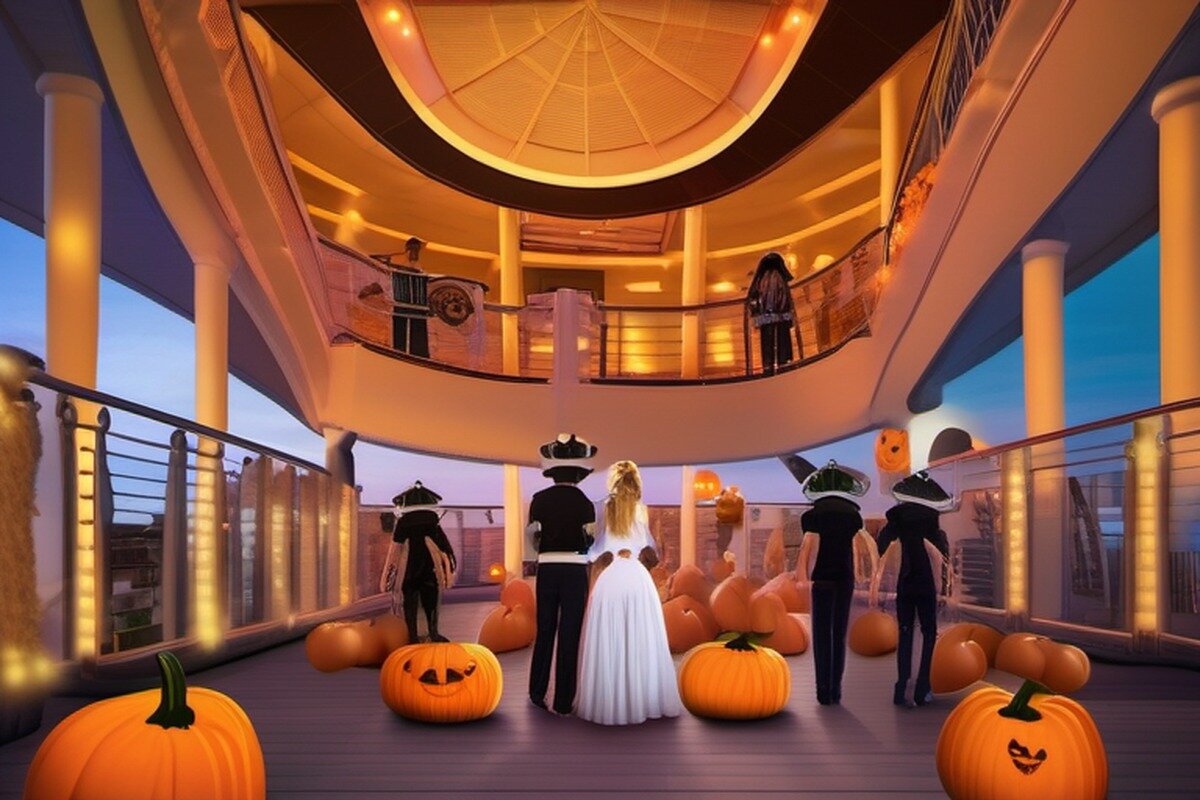
Carnival will run “Frightfully Fun” Halloween sailings across all 29 ships in 2026, from late September through October 31. The program is a reminder that cruise life is not only itinerary and hardware; the calendar can completely change the mood of the same ship.

The same ship can feel different in October

Seasonal programming is one of the easiest ways for a cruise line to change the emotional tone of a sailing without changing the ship. Cruise Industry News reported on June 23, 2026 that Carnival Cruise Line plans to offer its “Frightfully Fun” Halloween cruises across the fleet in 2026, covering all 29 ships, including its Australia-based vessels.

The program stretches beyond Halloween night

The sailings are scheduled from late September through late October, with Carnival Luminosa beginning the season from San Francisco on September 20 and multiple ships starting their final themed departures on October 31. That makes Halloween a month-long onboard season rather than a single costume party.

Decor changes passenger behavior

A decorated ship tells guests what kind of week they have entered. Atriums, dining rooms, youth spaces and public venues become part of a shared holiday script. People who might not attend a normal deck party may show up in costume, families may plan photos differently and strangers have an easy reason to talk.

Fleetwide scale matters

Because Carnival is applying the theme across every ship, the program becomes part of the brand’s seasonal identity rather than a niche event. That consistency is useful for repeat guests. A passenger booking a Carnival cruise in October can reasonably expect some Halloween atmosphere instead of wondering whether the ship will participate.

Not every activity appears on every ship

Carnival said all ships will offer Halloween decorations and activities, while a few vessels will not include the Patch the Pumpkin Pirate activity. That detail is worth noticing because themed sailings are rarely identical. Families who care about a specific children’s event should check the exact ship and sailing before treating the fleetwide headline as a complete schedule.

Seasonal cruises can be ideal for families

Halloween is especially cruise-friendly because it gives children and adults a shared theme without requiring a complicated port plan. Costumes, parades, photos and themed events work well on a ship where venues are close together and the audience is already gathered for entertainment.

The tradeoff is saturation

Guests who want a quiet, neutral cruise should remember that a holiday sailing may feel louder, more decorated and more event-driven than an ordinary week. That is not a flaw if you booked for the atmosphere. It is a mismatch if you expected the ship to ignore the calendar.

The cruise-life lesson

Carnival’s Halloween program shows why the date of a cruise matters as much as the itinerary. The same cabin, same restaurants and same ports can feel different when the ship has a shared seasonal mood. For many passengers, that is the point: the ship becomes not just transportation, but a temporary holiday community.

ФE
Федя, Easy Sea Travel
Contributing writer
Carnival’s record quarter shows cruise demand is still outrunning fuel pressure
News 3 min read Федя, Easy Sea Travel 24 Jun 2026

Carnival’s record quarter shows cruise demand is still outrunning fuel pressure

Carnival Corporation reported record second-quarter 2026 revenue, record net yields and all-time high customer deposits, while also improving fuel consumption per available lower berth day by 5.6 percent. The result is a useful signal for the wider cruise market: demand remains strong, but fuel and regional disruption are still shaping the year.

A strong quarter with a fuel-price warning inside it

Carnival Corporation’s latest earnings update is more than a Wall Street story. Cruise Industry News reported on June 23, 2026 that the company posted record second-quarter revenue of $6.7 billion, record net yields and net income of $537 million. That matters because Carnival is not a single cruise line; it is a portfolio that includes brands across mass-market, premium and European cruising.

Demand is not the weak point

The most important passenger-facing signal is demand. Carnival said customer deposits reached an all-time high of $9.0 billion, up more than $450 million from the prior record. The company also said its booked position for the rest of 2026 is ahead of last year at historically high prices, while 2027 and later bookings are running ahead of prior-year levels.

That does not mean the year is easy

The quarter came with a clear headwind: fuel. Carnival said higher fuel prices and currency created a negative impact, while cruise costs per available lower berth day rose 6.0 percent because of fuel. The company also pointed to geopolitical volatility, especially around European deployments in the Mediterranean, as a factor affecting booking patterns and operating assumptions.

Fuel efficiency became the quiet headline

One of the most practical figures was a 5.6 percent improvement in fuel consumption per available lower berth day. That is not a glamorous number, but it is central to how cruise lines protect margins when oil prices rise. Better routing, technical upgrades, energy management and operational discipline can reduce the need to push every cost straight onto guests.

The booking curve tells its own story

Carnival said its booking curve remains the furthest out on record. In plain language, more passengers are committing earlier. That gives cruise lines more visibility, supports pricing discipline and helps them plan capacity. For travelers, it can also mean that waiting for late discounts is less reliable on popular ships and routes.

Europe remains a sensitive region

The company described pressure tied to the Middle East conflict, especially for Mediterranean deployment. That does not mean Mediterranean cruising is collapsing. It means cruise lines are constantly balancing demand, perception, routing, fuel and guest confidence. When a region is close to uncertainty, even sailings that operate normally can be affected by booking hesitancy.

Why passengers should care

Strong deposits and high occupancy can limit bargain hunting, while fuel pressure can influence surcharges, itinerary adjustments and onboard pricing strategies over time. At the same time, a profitable cruise company is more likely to keep investing in ships, destinations and service improvements. The passenger impact is indirect, but real.

The bigger cruise-market signal

Carnival’s record quarter suggests that cruising is still benefiting from durable vacation demand. The more interesting story is how the industry is handling pressure while demand stays strong. Fuel efficiency, pricing discipline and flexible deployment are becoming as important as new ships. For 2026, the cruise market looks healthy, but not effortless.

ФE
Федя, Easy Sea Travel
Contributing writer