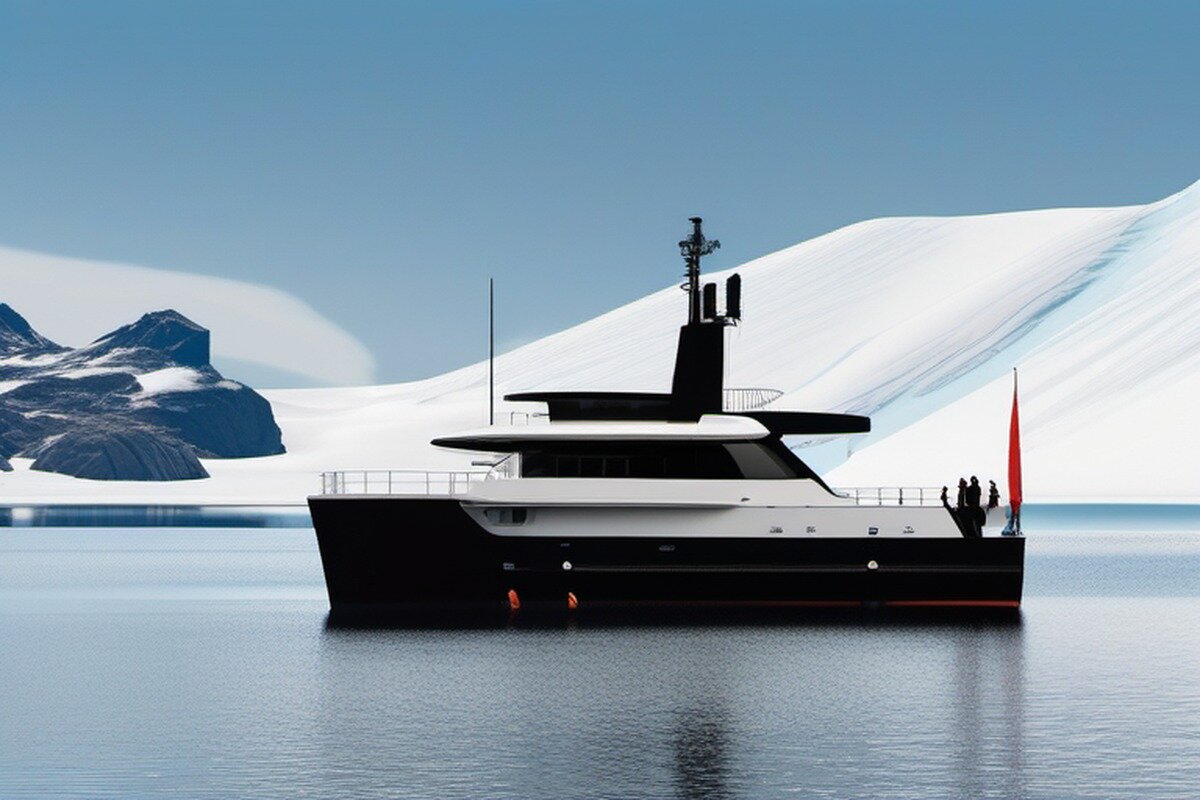
Velarca’s 32-guest concept pushes expedition cruising toward smaller and quieter ships
Velarca has unveiled a 32-guest, 100-meter expedition vessel concept with hybrid, wind-assisted and biodiesel operating modes. It is still a concept, but it reflects a clear market question: whether the next luxury expedition edge is less scale, not more.
A tiny expedition concept is making a large point
Expedition cruising has spent years becoming more sophisticated, more comfortable and in some corners more crowded. Velarca’s newly unveiled Explorer concept moves in the opposite direction. Cruise Industry News reported on June 19, 2026 that the Finnish maritime venture is presenting a 100-meter vessel designed for only 32 guests, supported by 32 crew.
The concept rejects the usual capacity race
Velarca says the design responds to tighter environmental expectations, changing guest behavior and demand for quieter exploration. Instead of adding more people and more amenities, the ship is positioned almost like a private exploration platform. That language matters because the luxury expedition market is increasingly competing on access, silence and the feeling of being far from mass tourism.
Propulsion is part of the story
The concept includes a hybrid propulsion architecture with three modes: electric propulsion, wind-assisted propulsion through the Velarca Rig system and biodiesel-powered operation. A concept is not the same thing as a delivered ship, but the design brief shows how future expedition vessels are being expected to answer environmental questions before they ever reach a shipyard contract.
The guest ratio is deliberately unusual
A one-to-one crew-to-guest ratio is not only a service statement. It changes how a voyage could be operated, from shore landings and safety briefings to dining, guiding and route adjustments. With only 32 passengers, the ship could in theory feel closer to a private yacht expedition than a conventional cruise product.
There is no delivery date yet
That is the important caveat. Velarca has not announced a projected launch date, and the program is being advanced through discussions with prospective owners, shipyards and technical partners. For now, the vessel is a market signal and design proposal rather than a bookable cruise.
Still, the timing is telling
Luxury travelers who have already tried comfortable expedition ships may now be looking for something more remote and harder to replicate. At the same time, fragile destinations are facing more scrutiny over visitor numbers, emissions, noise and local impact. A smaller expedition vessel does not solve every problem, but it changes the starting point of the conversation.
For the industry, this is a useful provocation
The concept asks whether the future of high-end expedition travel belongs to ships that are bigger and more hotel-like, or to ships that are more precise, quiet and limited. Even if Velarca Explorer changes before any build decision, the idea reflects a real pressure in the market: luxury is no longer only about adding features. Sometimes it is about removing volume.