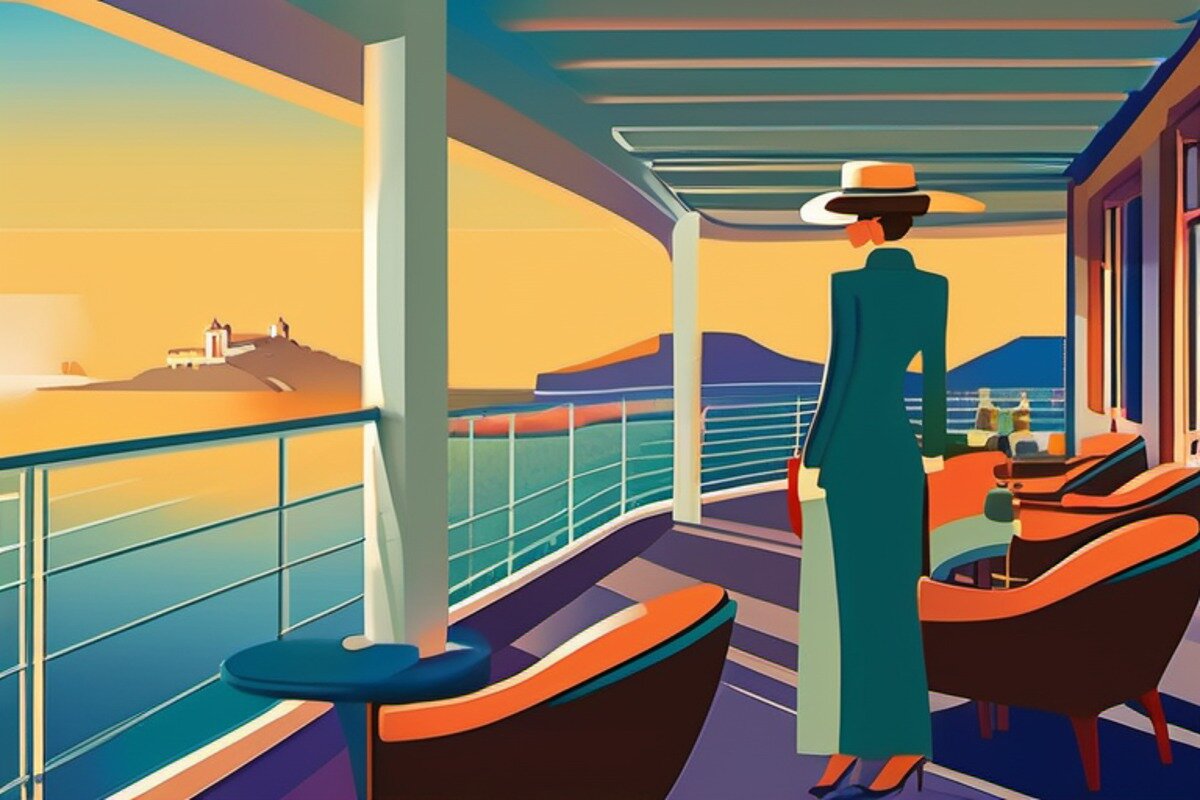
What ultra-luxury cruises really give you: less spectacle, more calm
People often board an ultra-luxury cruise expecting a bigger, louder version of premium travel. In reality, the value is usually found somewhere else: fewer crowds, quieter spaces, more personal service and a pace that feels intentionally unhurried.
The first surprise: there is less, not more
That is the misunderstanding at the heart of many first ultra-luxury bookings. Travelers pay more and assume they will get more attractions, more venues and more visible perks. What they often find instead is a quieter ship with a restrained, boutique atmosphere.
There are no giant signature features, no theme-park energy and usually no attempt to overwhelm you at first glance. The décor tends to be more discreet, the bars and lounges more intimate, and the overall mood much calmer.
Why the ship can feel smaller even when the fare is bigger
Compared with resort and premium cruise lines, the menu of things to do is noticeably shorter. Gary Bembridge uses a sharp example: Silversea Silver Nova had seven dining options, while Sun Princess offered 30 and Royal Caribbean’s Symphony of the Seas had 23.
That same contrast runs through the entertainment program. On Silver Nova he saw four singers, four dancers and roughly 10 events in a day. On Sun Princess, by comparison, the number of daily activities could reach around 80.
Where the money actually goes
Ultra-luxury usually puts its resources into space, calm, staffing levels and personal attention rather than spectacle. Venues are less crowded, pool chairs are easier to find, disembarkation tends to be smoother and service desks and bars usually come without long queues.
Cabins may not feel dramatically larger for the money and in some cases can even feel smaller than suites on premium or resort ships. What changes is the tone: richer décor, more polished materials and a more refined sense of comfort.
Dining is better, but not always in the way people imagine
Food is often more elegant and ingredient quality is often stronger, but ultra-luxury dining does not automatically become theatrical or Michelin-like. For some travelers that gap between expectation and reality is where disappointment begins.
The article also notes that Cunard’s Queens Grill can still feel more ceremonious in some ways, with dedicated tables, multiple waiters and tableside preparation. In other words, paying more at sea does not always mean the experience becomes more dramatic; sometimes it simply becomes more polished.
All-inclusive does not always mean absolutely everything
Most ultra-luxury fares include far more than mainstream lines: drinks, gratuities, basic Wi-Fi, specialty dining and fitness classes are commonly part of the package. But the boundaries still matter.
According to the article, excursions are extra on all ultra-luxury lines except Regent. Premium wines, faster Wi-Fi and some specialty venues may also come with added charges depending on the brand.
Who will love it most
The format works best for travelers who want fewer people, less noise, less queuing and more individualized service. Smaller ships also unlock ports that bigger vessels cannot easily reach, whether that means more intimate Greek-island calls or berths closer to the center of cities such as Shanghai.
If your idea of a perfect cruise involves buzz, endless choice and constant entertainment, ultra-luxury may feel underpowered. But if you want the sea to feel calmer, slower and more attentive, this is exactly where the category begins to make sense.